hadenblackman.com

Crossing the Dark Divide

» Font Size «

Since I’ve been posting Twitter/Facebook updates about my progress on my most recent graphic novel for Dark Horse, I’ve received a lot of questions about how I work. When I started writing comics, I also searched for advice – on everything from style to format to process. But while there are thousands of books and web sites devoted to screenwriting and fiction writing, there are very few resources for comic book writing (luckily I had some awesome editors to help me). Over time, I’ve managed to cobble together something that vaguely resembles a “process,” borrowing from other schools of writing (and leaning heavily on a handful of writing books, including Stephen King’s instructive and inspirational On Writing).

So, here it is, at least as it stands today, the process I used for my most recent graphic novel. It’s constantly evolving, organic (meaning that I don’t always do everything in the same order, I often go back to a previous step to make changes, and I sometimes combine steps), and often collapsed out of necessity (by things like a deadline).

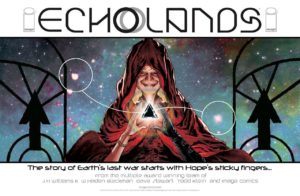
Art by J.H. Williams III!

1. The Spark: Usually, I’m asked to pitch a specific type of story – a one-shot about Vader hunting down a Jedi or a Hellboy short story for an anthology series. I’ll take any direction and ideas I can get because it makes my job a lot easier. In the absence of a core concept, I revisit an Excel spreadsheet with hundreds ideas for stories – most just short, one-liners that pop into my head a few times a day – to see if anything resonates. If that doesn’t yield anything, I do a few brainstorming sessions. This almost always revolves around asking questions: “What really scares Hellboy?” or “How did Jango Fett become the Prime Clone?” Sometimes I just know I want to tell a story about a specific character and that’s enough to get going.

2. Premise: Once I have the spark of an idea, I identify the main characters, the central conflict, any character change, and the basic desire lines (who wants what and why). Ideally, I come out of this phase with a short “logline” (“Hellboy must stake out a remote lovers lane with an attractive FBI agent in order to capture the murderous Goatman.”).  

3. Focused Brainstorming: Next, I write a list of every possible event, scene, character moment, and even line of dialogue related to the premise I can think of. I’m not trying to flesh out a plot here, but just vomiting out anything and everything that pops into my mind about the premise.

4. Outline: For me, the most difficult, time-consuming, and rewarding step is often the detailed synopsis. I start very loose, almost like writing a short story, and try to let the characters determine where the story should go. I’m often surprised by what happens. Once I know the beginning, middle, and end, I edit and refine. The level of detail varies from scene to scene – I’m usually light on describing action (“Ventress and Obi-Wan fight!”), and heavy on detailing character interactions, to the point of including specific lines of dialogue. I keep at it until I can see most of the story in my head. By the time I’m done with the outline, I should also know what the story is “about” – the theme.

5. Character Arc: By the time I hit the outline, I like to have some idea about who changes and how. At the very least, I need to know where the characters start and where they end up. As I work on the outline, I detail the key moments, decisions, and revelations in any character arc.

6. Design Themes & Symbols: Comics are a visual medium, so once I know the overall story theme and character arc, I try to come up with some sort of visual hooks for the story.

7. Page Budget: Comic books have fairly standardized metrics: A typical single issue comic is 22 pages long (not counting ads and other material) with roughly 4-6 panels per page (though this varies based on the creative team). Most multi-issue story arcs are 4 to 6 issues (the “right” length to be republished later as a trade paperback). There’s more latitude with a graphic novel (my most recent is 80 pages), but even that might be constrained based on schedule and how many pages an artist can turn out. Unfortunately, I’m always trying to tell a bigger story than the page count allows, so recently I’ve started doing a quick budget spreadsheet to figure out if everything in the outline will fit. I list every scene and assign each an estimated page count. I consciously over-budget for action moments to allow for some single- or double-panel splash pages. Conversely, I try to under-budget for scenes heavy on dialogue because I tend to over-write the dialogue initially, and having tight budgets keeps me honest when I’m editing later. I do this step quickly – in less than 30 minutes – because it’s really just directional at first; I don’t want it to become too constrictive. However, if the outline clearly doesn’t fit into the budget, I’ll cut scenes or otherwise revise to get within a few pages of the target. The spreadsheet then becomes the foundation for the skeleton (see below).

8. Pitch: Before I start writing the script, I turn in a pitch document that basically includes the premise, notes about the character arc and design theme, and the detailed outline. For readability, I break the outline into “parts” – these aren’t necessarily traditional “Acts,” but logical breaks based on changes in setting, tone, or character. I don’t start writing the script until the pitch is approved.

9. Skeleton (Rough Draft): This might be my favorite step – basically a very rough, very fast first pass of the script. I try to keep the descriptive text as short as possible – snapshots of what will be in each panel and basic “camera” direction, just enough to visualize what’s going on. I also include stub dialogue and captions. I’m not concerned with the quality of the dialogue yet – I just want to get the point across. This gives me permission to overwrite dialogue and write badly, which keeps me from getting hung up on any specific exchange; the important thing is to just keep pushing ahead until I’ve finished the entire rough draft. Often, I’ll cut and paste from the outline. I try to remain conscious of “reveals” (page 1 and every even-numbered page is a chance to surprise the reader with something cool). The skeleton validates that everything I envision actually fits, determines the rough number of panels on each page, helps me identify plot holes and anything that doesn’t make sense, and tells me which characters and locations I’ll need to flesh out further. But, the most exciting part of the skeleton is that it often generates new ideas that take a scene in a different direction than I originally imagined. I’ve found that the skeleton is hugely important because it prevents me from writing detailed panel-by-panel descriptions that will eventually need to be reworked or cut altogether if I’m over budget (and I’m always over budget) or something in the story isn’t working for me. I don’t move to the next step until I’m in budget, which often means going back through the skeleton and looking for stuff to cut or change. I’m still determining the “right” pace for the skeleton, and it’s highly-dependent on the outline’s level of detail, but I think I’m averaging about 1 page every 15-20 minutes for the first pass.

10. First Draft: Here, I focus on fleshing out the skeleton, adding much more detailed panel descriptions and “camera” direction. I also create a section at the front of the script for “Artist Notes” – basically a place where I can describe recurring characters and locations (which is actually a big chunk of work). I take a pass at the dialogue, but I try not to get hung up on this just yet. I often rework, replace, move or cut entire scenes. And this is where I start adding “sound effects” (“KAPOW!”). Again, new ideas come up during this step, especially for action sequences, and I’ll make changes to accommodate better ideas. My pace has been about 1 page every 15 minutes, unless I’m reworking a sequence, in which case a page could take much longer to get right.

Art by Ramon Bachs!

11. Second Draft: The second draft is really about editing, especially dialogue. I actually start by reading just the dialogue, focusing all of my energy on cutting down and refining it before revisiting the panel descriptions. In this phase, I still might move around some panels, but rarely make any wholesale revisions. Still, there’s always room for a good idea – if I get a better idea for a panel or scene even at this late stage, I’ll try to embrace it and make the changes necessary to get it in. By this draft, I really better know what the story is “about,” so I also try to add recurring images and symbols if necessary. Finally (and maybe most importantly), I try to put myself into the artist’s head when rereading the panel descriptions – the last thing I want is for the artist to think “How am I going to cram all that into one panel?” I’m often guilty of trying to include small details (a character’s finger on the trigger of a gun) in a panel that also includes “broad” description (multiple characters or lots of action), so I use the second draft to catch that stuff and fix it. This is also where I add notes for the letterer and colorist.

12. Polish Pass: This is my “copy edit” pass meant to catch any typos, but it’s also the last chance to improve the dialogue and add any additional notes or description.

Two other quick bits of “advice”:

Once I start the skeleton, I write every night until I get through the first draft. Otherwise, I’ll lose momentum, the characters’ voices, and sometimes even the theme. After the first draft, I try to take a few days off and work on something else before I tackle the second draft. This lets me come back to the story refreshed and sometimes with new perspective.

And, I always, always try to remind myself of this: The only real “budget” in comics is the page count. This is one of the major differences between comics and films, television, and games. You don’t have to pay for shooting on location, so you can go anywhere. You don’t have to pay for special effects, so explosions can be as big as you want. You don’t have to pay for actors or extras, stunt men or coordinators, so you can have as many characters as you want and have them do anything you want. Anything you can dream up can be part of the story, as long as it fits in 22 pages.

I love monsters, especially the lost, lovelorn, and lonely kind — the afflicted Wolf Man; the misguided Creature from the Black Lagoon; Frankenstein’s tragic monster; even Jeff Goldblum’s suffering Brundle-Fly… Always on the lookout for new monsters, or new takes on existing archetypes and characters, I was delighted to stumble across ”The Mad Scientist’s Daughter” by Theodora Goss. Concerning a group of women with infamous fathers, it’s dark but funny, grim and sweet all at once.

There are a ton of reasons to love Borderlands, but one of the things I appreciate the most about the game is its commitment to a visual language. Where do I go next? What doors can I open? What can be destroyed? What can hurt me in the environment? What kind of attack does that enemy have? How do I defeat this creature? Conveying the answers to all of these questions (and hundreds more) relies heavily on establishing consistent visual cues. If some doors can be opened and others can’t, the locked doors should look different. If a force field is going to hurt me when I run into it, that force field better warn me ahead of time by looking (and even sounding) dangerous. Not earth shattering insight, but something that’s very easy to forget in the quest to innovate or make beautiful art.

Borderlands’ visual language includes many well-etablished conventions, including color-coding both loot (based on traditional RPG codes for rarity) and some enemies (based on the type of damage they deal: red for fire, blue for electricity, green for corrosive, etc.). But my favorite visual cue is the bright green light applied to every “treasure chest” in the game. While “Green Means Gold” has undoubtedly been used in other games, the consistency with which it’s used in Borderlands is impressive. Money, weapons, ammo, and other goodies can be found in a wide range of containers: lockers, red crates, small lock boxes, and even old washing machines and trash heaps. Built into every one of these (even the trash heaps) is some kind of bright green light. There’s a sense of glee (and maybe greed) when, after clearing an area of enemies, you look around and see a dozen green lights glowing from shadowy corners, through open doorways, behind fences, or on top of roofs. Each green light offers the promise of reward, ranging from a few bucks to a rare weapon you can’t wait to test out on the next group of enemies.

Seems like just a little thing, but often it’s the little things that prove most important. 

My most recent writing gig — Star Wars: Purge #3 — was announced last week by Dark Horse. The story, called ”The Hidden Blade” (a nod to Samurai cinema), focuses on Darth Vader’s personal mission to find and destroy the last of the Jedi. Solicitation text: 

On a remote world, Darth Vader chafes at the assignment given to him by the Emperor: guarding an Imperial manufacturing facility from the anti-Imperial natives. Vader feels the duty is beneath him — until he learns that a Jedi Master and his Padawan are in league with the natives!

Now the game is afoot, and Vader is on the trail of his favorite prey. No ambush, no local monstrous lizards, will deter him his pursuit. Woe be to the Jedi when Vader catches up with them! This issue follows events in Revenge of the Sith!

Art by Chris Scalf, who does amazing character and creature work.

I’m a sucker for second-, third-, and tenth-tier superheroes, so it was like Christmas came early last night when I opened my e-mail and found a piece from my buddy Michael Stribling of the Phantom, one of the most underrated pulp heroes. It’s awesome! I especially dig the background.

LucasArts debuted a trailer for The Force Unleashed II - a game I’m currently working on, alongside a ridiculously talented team - this past Saturday on the Spike TV VGA 09 broadcast. The announcement was followed by a press release and the launch of the official web site, where you can find the trailer and a powerful piece of key art. I can only confirm what’s in the press release and the trailer: Starkiller, the tortured protagonist from the original game, is back… And I’m thrilled to see him in action again.

Starkiller Returns! 

Dec
13
Spooner

spooner“They make it look effortless.” It’s how we describe the best athletes and actors. Reading anything by Pete Dexter is at once disheartening and inspiring because he makes writing seem effortless. I first read Paris Trout nearly 20 years ago, and tonight I just finished Spooner, having read everything else Dexter in-between, and in the process becoming convinced that he’s the greatest living American novelist,  perhaps Mark Twain reincarnated somewhere in Philadelphia. Spooner feels like a continuation of Deadwood (Dexter’s Wild Bill novel) in that both are studies of complicated but understated relationships between men, poignant without being sentimental, and incredibly funny without ever becoming mean-spirited. An early passage, describing the title character’s difficult birth, which coincides with a fire at an old folks’ home across the street:

“It’s a stalemate, then, the first of thousands Spooner will negotiate with the outside world, yet even as visions of stillborn livestock and dead mares percolate like a growling stomach through the tiny band of spectators, and Dr. Woods discreetly leaves the room to refortify from the locked middle drawer of his office desk, and Lily’s sisters, who, sniffing tragedy, have assembled from as far off as Omaha, Nebraska, but are at this moment huddled together at the hallway window to have a smoke and watch for jumpers across the street, Spooner’s mother rolls out of the bed on her own and gains her feet, and in those first vertical moments, with one of her hands clutching a visitor’s chair for balance and the other covering her mouth against the possibility of unpleasant morning breath, she issues Spooner, feet first and the color of an eggplant, the umbilical cord looped around his neck, like a bare little man dropped through the gallows on his way to the next world.” 

A few months ago, I did an interview with X360 Magazine about the experience writing Star Wars: The Force Unleashed, and storytelling in games in general. The material is being used for two separate articles on scriptwriting and storytelling, but the full transcript of the interview has been posted in two parts on the X360 site. Follow the links for Part One and Part Two. Thanks to Sam Roberts for providing some great questions! 

The "goodbye kiss" between Juno and the Apprentice was one of the most difficult to write and produce.

The "goodbye kiss" between Juno and the Apprentice was one of the most difficult to write and produce.

No SFX Needed

No SFX Needed

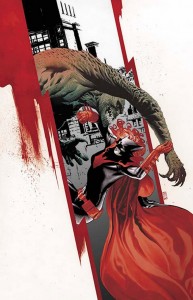
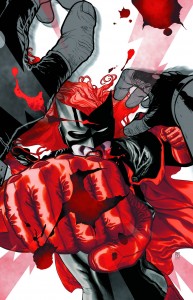
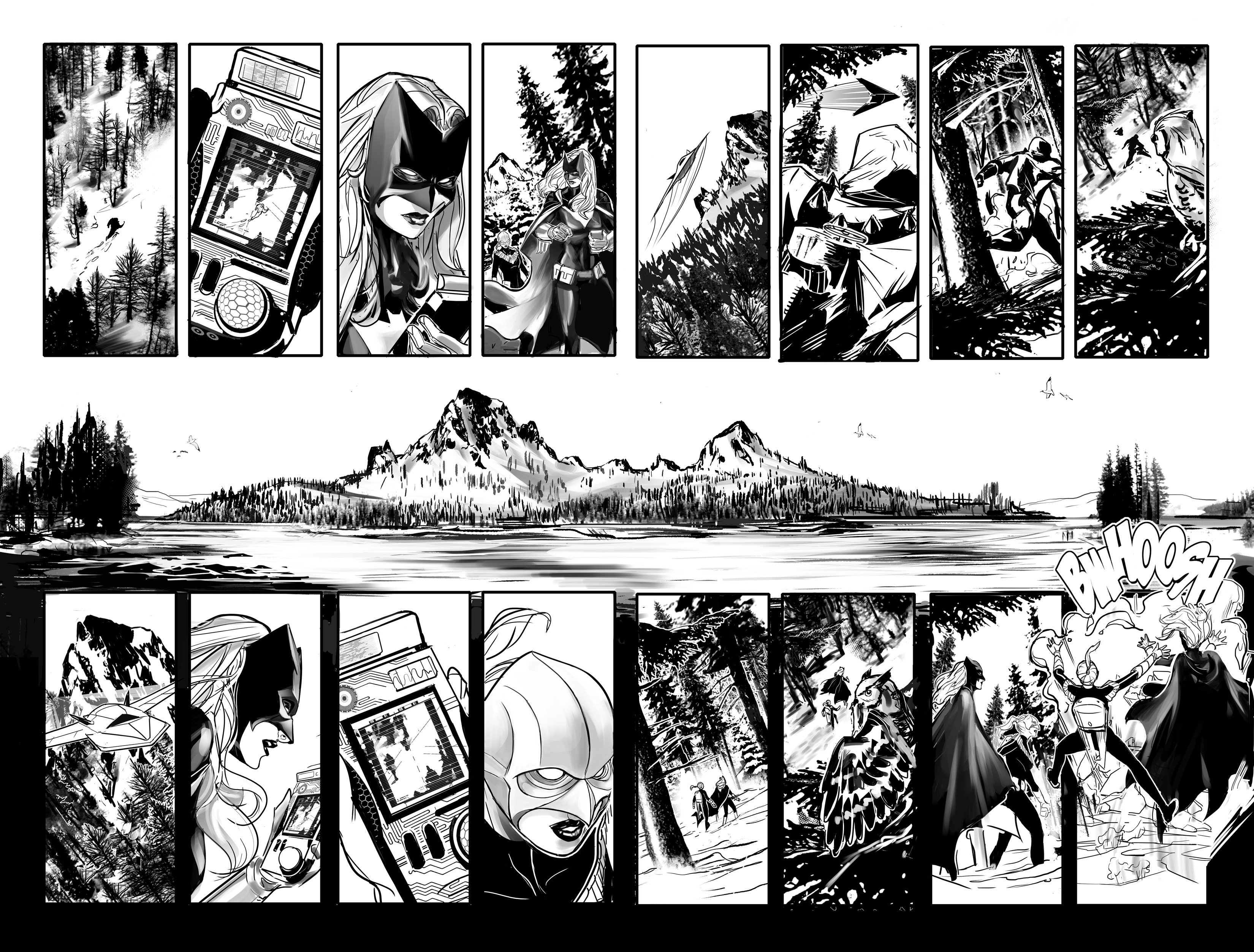
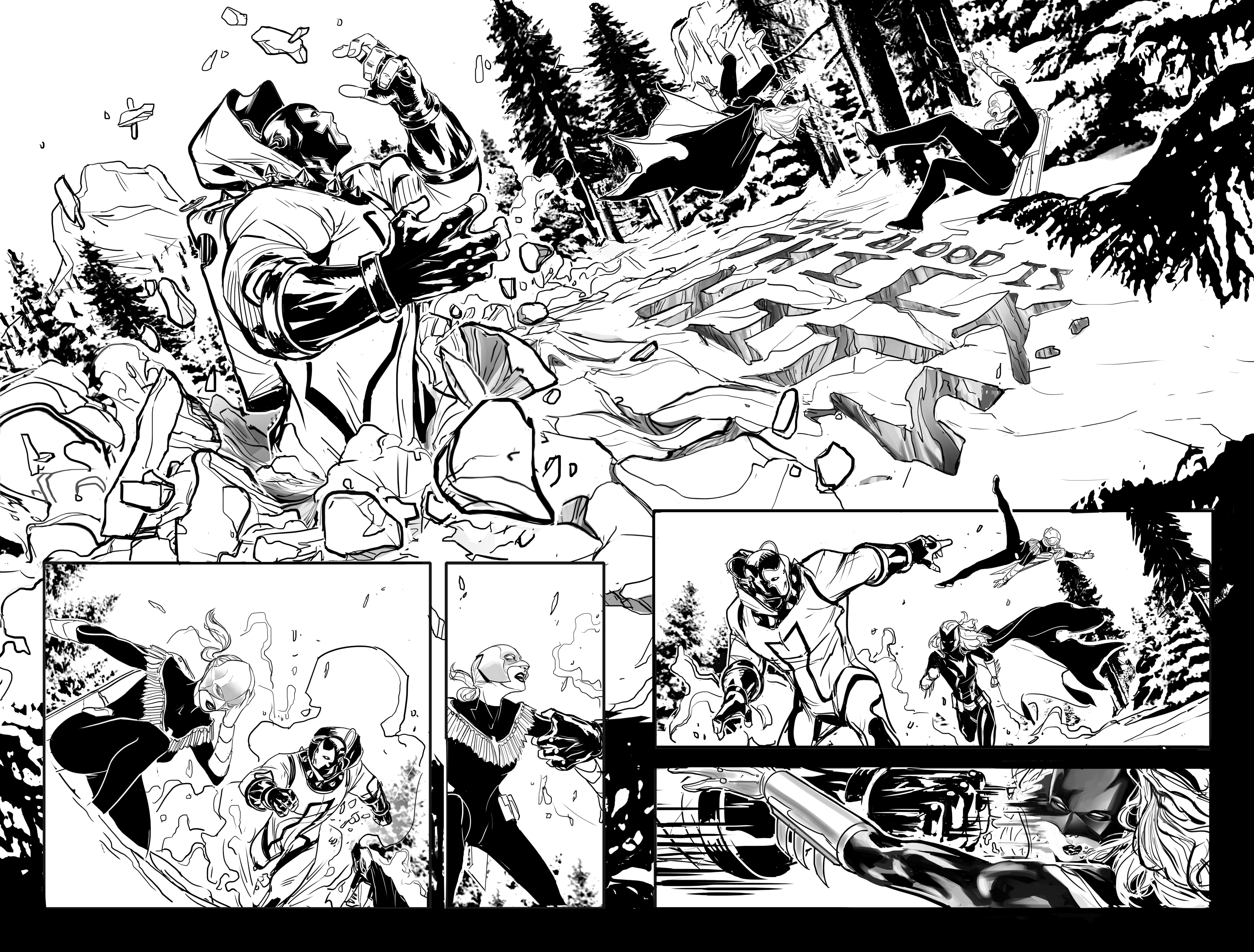
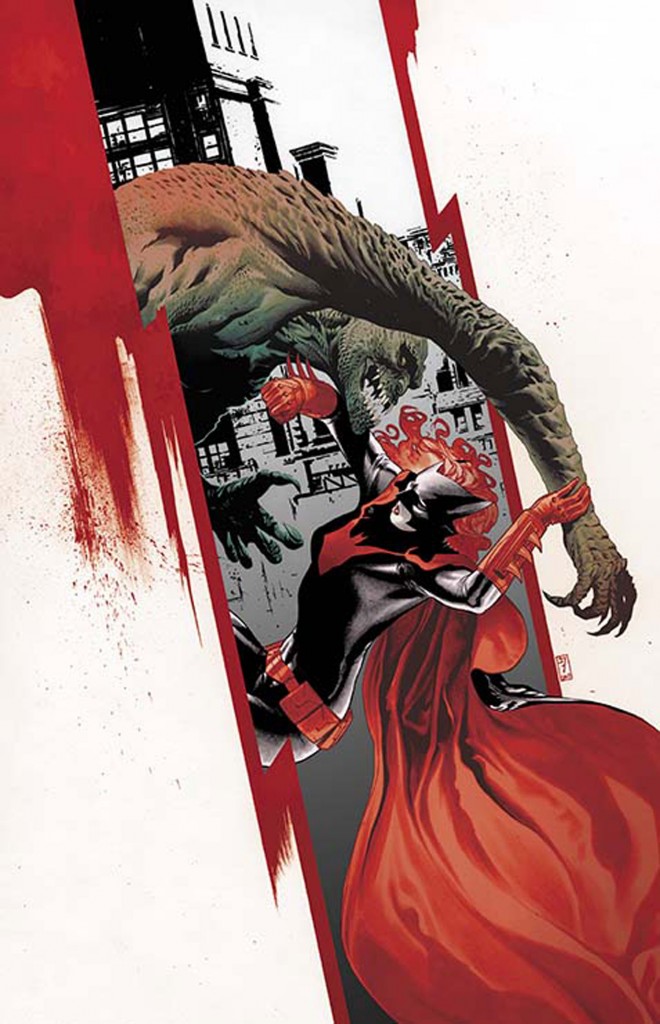
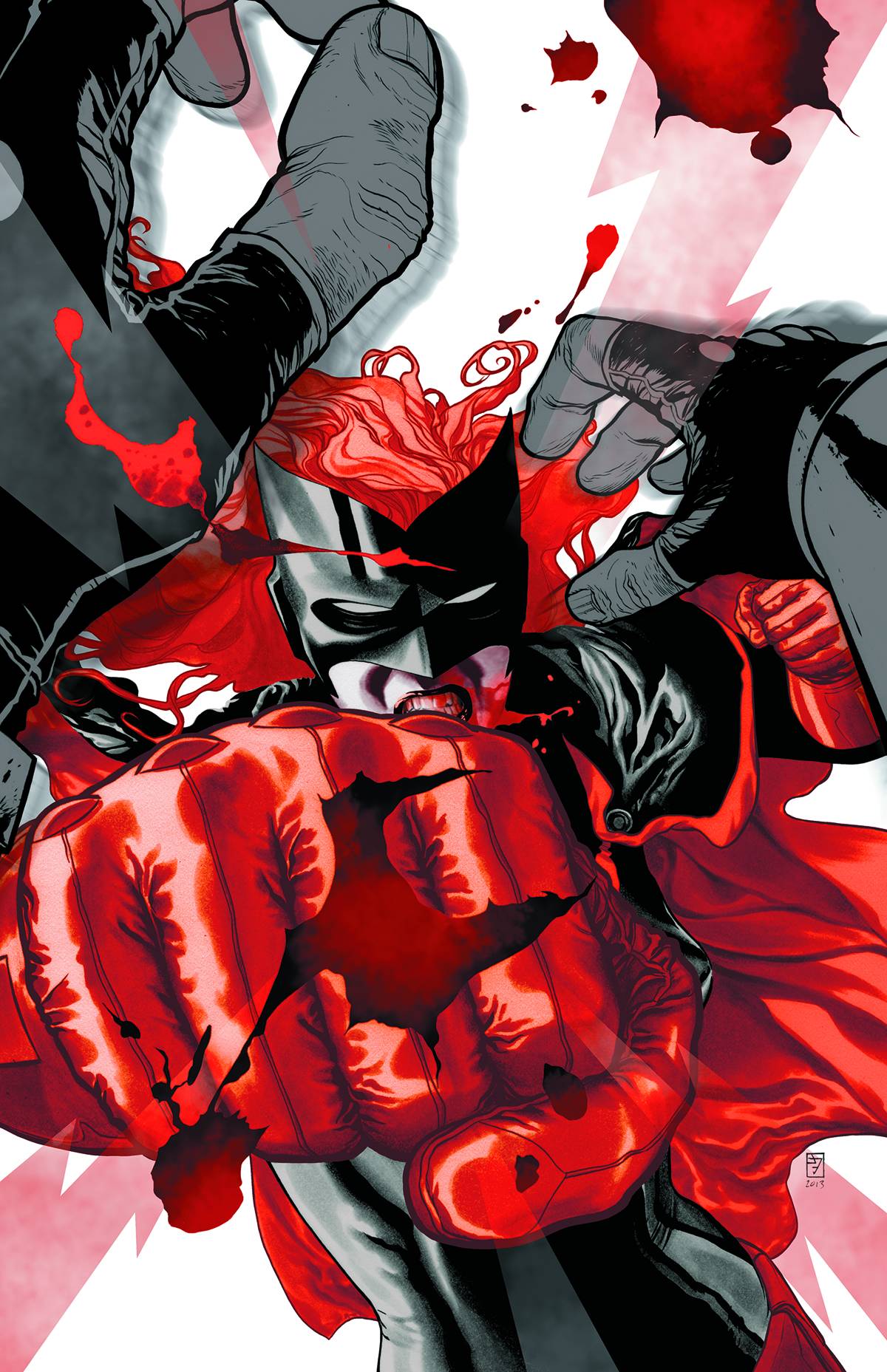
I picked up Detective Comics  #854, the first to feature Batwoman and artist J.H. Williams III. I was totally blown away - from panel design to lighting, it’s some of the best work in recent memory, and certainly one of the strongest books in DC’s current lineup. Perhaps most impressive is the way Jim flows between two very distinct styles depending on who is taking center stage – Batwoman or her alter-ego. It’s almost like getting two artists for the price of one, but there’s enough consistency and cohesion between the two styles that it’s never jarring.  

And so is this...

This is J.H. Williams III...

This is J.H. Williams III...
And so is this…


I recently had the privilege of writing a short ”Ask the Expert” <looks over shoulder> piece for Storylink. While you’re there, be sure to read the more insightful Q&A with Simon Kinberg, screenwriter for X-Men: Last Stand, Jumper, Mr. & Mrs. Smith, and the upcoming Sherlock Holmes flick. His writing process is especially interesting, but my favorite quote covers the heart of story:

I really believe all good stories start from the same place: interesting characters in an emotionally charged situation. For me, the difference between drama and genre is this: in dramas, you have relatable characters in a relatable situation, whereas in genre films you have relatable characters in an unrelatable situation (fighting ghosts or robots or giant sharks, etc…). But you have to relate to the characters.

And then read the interview with non-stop Jimmy Palmiotti!

“It’s as simple as having a planet of fire … and you want to keep the characters from burning.”